

 Spotify
 Apple Podcasts
 Amazon Music
 iHeartRadio
 RSS Feed
 Pandora
 Castbox
 Podcast Addict
 Give Them the Compass, Not the Map: Raising Entrepreneurs for 2035
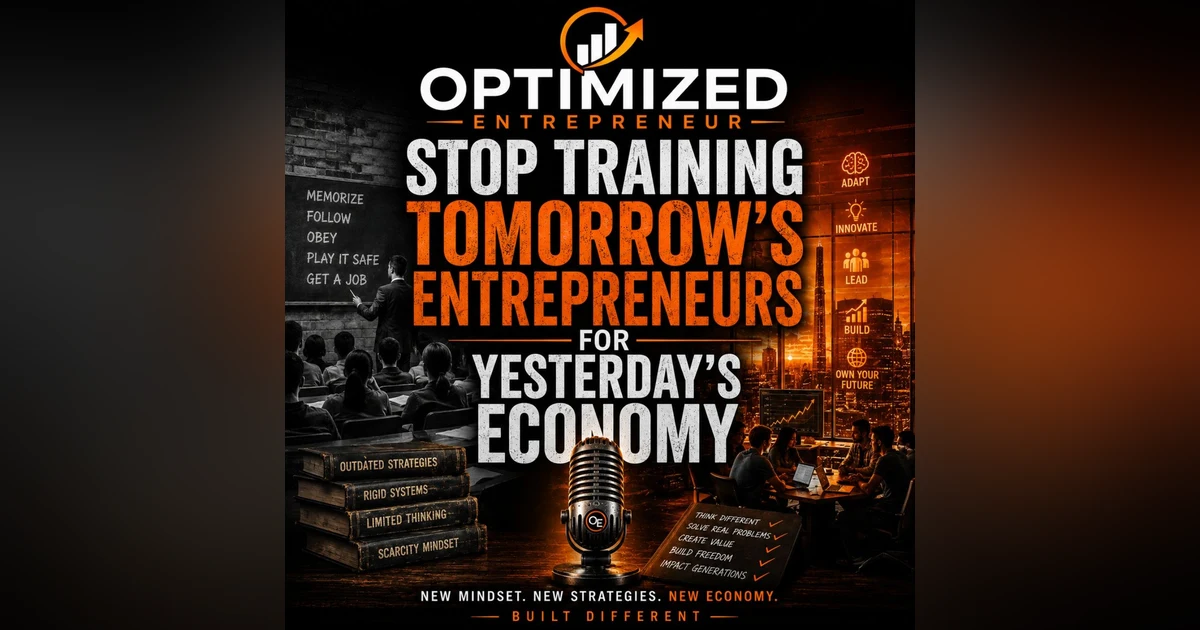
A man once bought the biggest Yellow Pages ad in his county. Full page, back cover, eighteen thousand dollars a year, and it built his company for two decades. He kept renewing it long after the phone went quiet, blaming the economy, his crew, and his prices. The ad was never the problem. He had simply stopped separating the thing that worked from the reason it worked. Then he passed that same confusion down to his son.Jeremy Hanson opens with that story because it is the mistake experienced entrepreneurs make most often when they try to help the next generation. This episode is the companion to the infrastructure show. That one asked where the money is going. This one asks whether we are preparing anybody to recognize an opportunity like that when it arrives.The framework is a single distinction that runs through the whole hour: principles survive generations, methods rarely survive a decade. You need customers is a principle. The full-page ad was a method. Jeremy separates the two, then builds the permanent foundation he would teach in 1980, today, or in 2050 — selling as the transfer of confidence, real fluency in cash flow rather than vocabulary, solving problems people will pay to make disappear, keeping your word in a market where anyone can look credible, and understanding people because businesses are people who happen to generate numbers.From there the episode turns to what genuinely changed. The cost of capability collapsed, so the modern entrepreneur does not need more resources than we had, they need to leverage what sits in front of them for the price of a phone bill. Artificial intelligence removed the busywork that used to hide the absence of judgment, which means the skills worth teaching now are knowing what to ask, recognizing whether an answer is any good, verifying what is true, and deciding on a deadline with money attached. Jeremy walks through the seven forms of leverage most owners do not learn until their forties, the discipline of converting borrowed platform attention into owned customer relationships, and why the trades are technology businesses now and the college-or-manual-labor framing is costing kids money.He also names the traps. Revenue worship, and the two owners in the same industry who took home ninety thousand and three hundred thousand on wildly different top lines. Building income instead of assets. Removing every obstacle from a young person's path and removing the lesson with it. And the hardest one for successful people, expecting a son or daughter to build a copy of your business rather than finding the opportunity you cannot see.The close: do not hand a young person a map from 1995 and expect them to navigate 2035. A map shows where somebody else has already been. A compass works in country nobody has walked yet, and that is exactly the country they are inheriting.Whether you are raising an entrepreneur, mentoring one, hiring one, or becoming one, this is the curriculum.This episode is brought to you by OneSkin. Their OS-01 peptide was developed by a team of women scientists focused on skin health at the cellular level over the long term. Get started today with fifteen percent off using code JEREMY at https://oneskin.co/JEREMY.Full show notes, resources, and the premium channel at optimized1.com. Join the Built Different newsletter for the weekly breakdown.
A Fuzzy Life Entertainent Production