

 Spotify
 Apple Podcasts
 Amazon Music
 iHeartRadio
 RSS Feed
 Pandora
 Castbox
 Podcast Addict
 The Cost of Being Too Good at What You Do
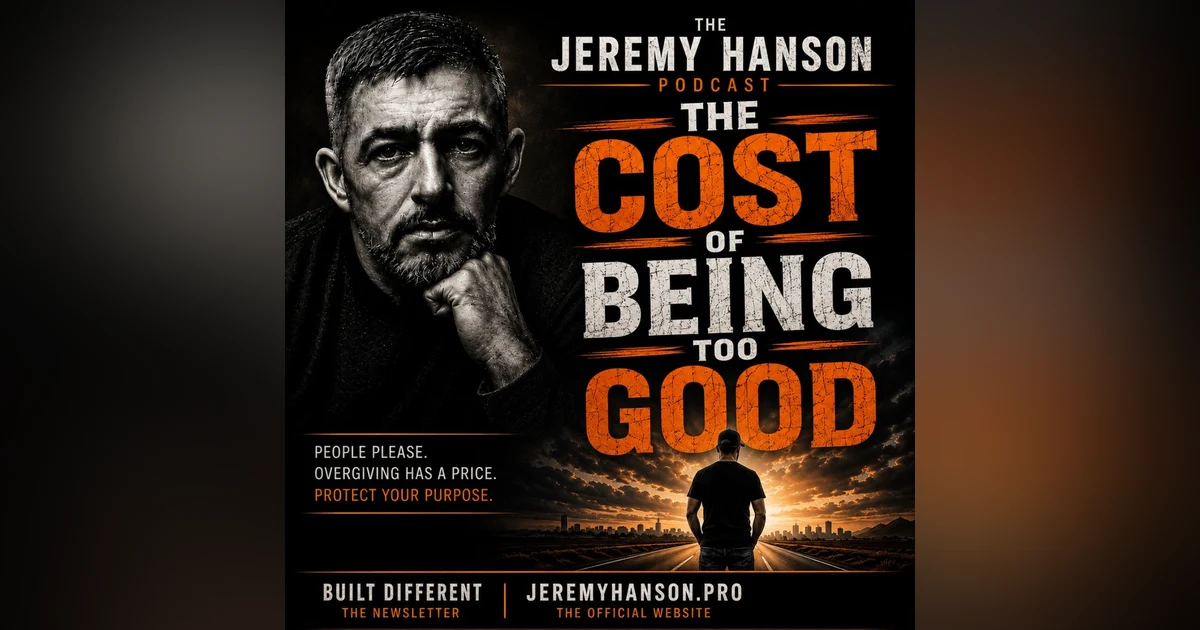

The Cost of Being Too Good at What You Do: When Your Strength Becomes Your Company's Weakness. There is a compliment entrepreneurs love hearing: I don't know what we'd do without you. Jeremy Hanson explains why it might be the most expensive sentence...
The Cost of Being Too Good at What You Do: When Your Strength Becomes Your Company's Weakness.
There is a compliment entrepreneurs love hearing: I don't know what we'd do without you. Jeremy Hanson explains why it might be the most expensive sentence in your business.It feels like success. Your employees need you. Your customers ask for you. When something goes wrong, they call you. You're the fixer, the closer, the person who knows how everything works. Until one day you realize nobody can do anything without you, and the compliment stops sounding like praise and starts sounding like a diagnosis.The episode opens on a dock, on the first vacation Jeremy had taken in three years. Four days. By the second morning he had stopped putting the phone down. Eleven questions, none of them hard, every one of them something his crew could have answered. They weren't calling because they couldn't decide. They were calling because they had learned they weren't supposed to. And he had taught them that, one five-minute answer at a time.Competence becomes a trap because people give it to you. Good with customers? You get every difficult customer. Good at putting out fires? You now own every fire. Each individual decision to take the work back is defensible. It's the sum of them that ruins you.Then there's the part that's harder to admit: being the hero feels good. There's a dopamine hit in walking into a stuck room and solving it. We don't consciously design companies around our own egos, but we build organizations where every road leads back to us, and then complain that every road leads back to us. That's the entrepreneur's paradox. We want freedom and we want to feel indispensable, and eventually you have to pick one.Being needed and being valuable are not the same thing. If twenty people need your approval to move, you may not be creating value. You may be creating a traffic jam, and the better your judgment gets, the busier the intersection becomes. You cannot fix that by getting better at directing traffic.The episode works through the practical side: why five people at eighty percent beats one person at a hundred, how to extract what's in your head into systems other people can use, what to say instead of answering the question, why handing over a task without handing over the authority is the worst possible combination, and which decisions genuinely belong to the owner.Then the test. What happens if you disappear for thirty days? Not forever. Thirty days. Walk it hour by hour and be honest. The places where the movie goes blank are specific, named, fixable holes, and you just found them without losing a dollar.Because if your business needs the best version of you every single day just to function, you haven't built a business. You've built yourself a very demanding job, with the most demanding boss you've ever worked for.
A Fuzzy Life Entertainent Production