


 Spotify
 Apple Podcasts
 Amazon Music
 iHeartRadio
 RSS Feed
 Pandora
 Castbox
 Podcast Addict
 The Jeremy Hanson Podcast Choices finish_mixdown
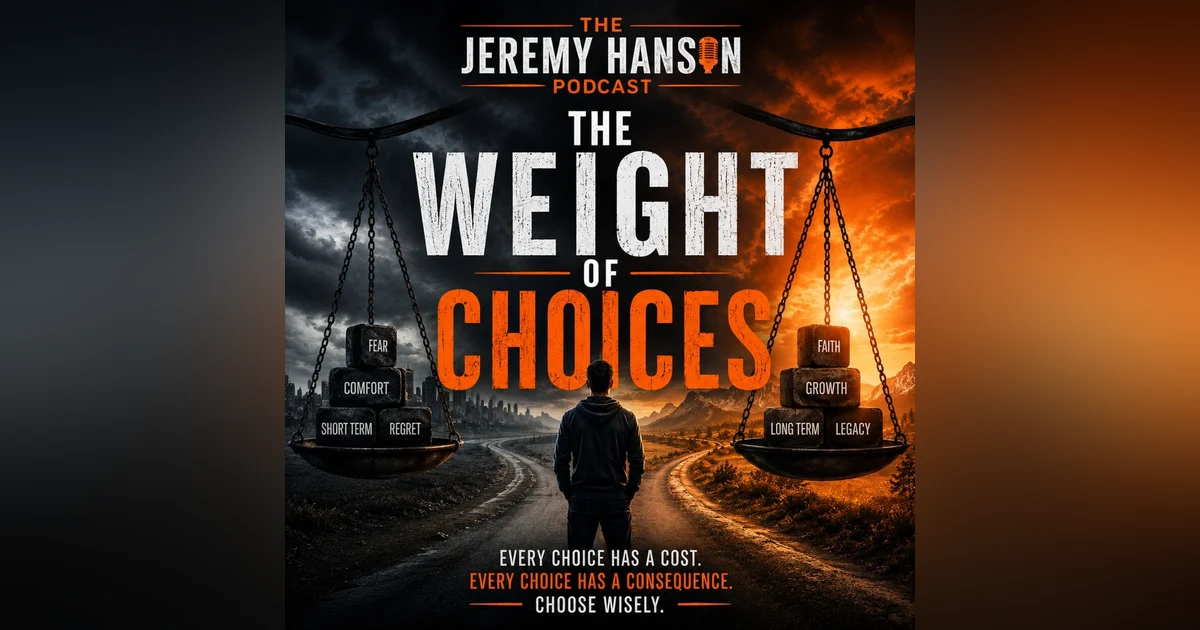

Life almost never asks you to choose between something obviously right and something obviously wrong. The decisions that actually shape a business, a marriage, a bank account, and a legacy are the ones where both doors cost you something you don't want to give up. In this solo episode, Jeremy Hanson opens at a kitchen table at four-thirty in the morning with a legal pad and two columns drawn down the middle, and both columns bad, and builds out a complete framework for making hard decisions when none of the options look good.Jeremy starts with the reframe that changes everything: there are no perfect decisions, only prices you're willing to pay. Growing a business costs time. Not growing it costs opportunity. Financial discipline costs today's comfort. Skipping it costs tomorrow's freedom. The work is never finding the option with no bill attached. The work is deciding which bill you can live with, and then writing that cost down in specific language instead of vague language, because vague costs are terrifying and specific costs are just math.From there he takes on the most expensive lie in business: I don't have a choice. Most of the time that sentence isn't true. You have choices. You just don't like the options. Waiting is a choice. Ignoring a problem is a choice. Avoiding a conflict is a choice. And when you refuse to decide, life decides for you, and life is a worse decision-maker than you are because it doesn't know your values, your family, or the thing you were trying to build.Chapter four delivers the single most useful piece of advice Jeremy has ever been handed, and the one he has used more than almost anything else he's been told. If you don't have a good option, you do the next best thing. It sounds simple, and it does something powerful: it takes perfect off the table. Once you accept there is no good option, you stop hunting for one, and the question gets smaller and far more answerable. You're no longer asking what's right. You're asking what's next best. And you can almost always answer that. A lot of people are frozen right now not because they don't know what the next best thing is, but because they're still holding out for a best thing that was never on the menu.Jeremy then walks through the two lenses he runs every difficult decision through before he commits. Perspective, which is simply where you're standing when you look at the thing, and the honest question of whether you're seeing this through fear or through faith. And a fresh point of view, which is not the same thing, because sometimes you don't need different choices, you need different eyes. He shares the test he uses to catch fear wearing his gut's clothes, and four practical ways to manufacture a new point of view on purpose instead of waiting around for one to show up, including the handwriting exercise that has talked him out of two significant mistakes.The heart of the episode is the three guides. Your gut, which means quiet conviction built over years and not the loud emotion that shows up at eleven at night. Your mentors, who are not there to make your decision but to expand your perspective, and the one question to ask them that gets gold every time. And new eyes, which sometimes means stepping away, talking honestly with your spouse, or praying for wisdom instead of praying for an outcome. Jeremy makes the case that most people who stay stuck are using one of the three, and lays out the specific failure mode of each.The back half turns to consequences. Every yes automatically creates a thousand no's, which sounds like restriction and is actually the opposite, because freedom isn't having unlimited choices, freedom is making the right choices consistently. And then the quiet mechanism underneath every life that gets built or lost: nobody becomes successful because of one decision, and nobody wrecks their life in an afternoon. Tiny choices become habits, habits become character, and character becomes destiny. Compounding is boring right up until it isn't, and it does not care which direction you point it.If you are sitting in front of a hard decision right now, one where every option carries pain and you have been circling it for weeks, this episode is a working framework, not a pep talk. Check your perspective. Find the third door. Trust the wisdom you've earned. Lean on your mentors. Ask for new eyes. Then decide, move, and adjust as you learn more, because your future is not built by one giant moment. It's built by thousands of choices made one day at a time.QUESTIONS THIS EPISODE ANSWERSWhy do hard decisions almost always come down to hard versus harder instead of right versus wrong? Because the decisions with an obviously correct answer aren't the ones that keep you up at night. Jeremy explains that facing a hard-versus-harder decision is not evidence that you took a wrong turn somewhere. It's the tax on ambition, and it's what it costs to be someone who's actually building rather than watching. What does it mean that every choice has a price? It means the search for a perfect decision is a search that ends nowhere, because every path carries a bill and the real work is deciding which bill you're willing to receive rather than hunting for the option that costs nothing. How do you make that price concrete enough to act on? You write it in specific language. Not "it'll be a big investment," but the actual dollar figure and the actual number of evenings it will take, because vague costs paralyze people and specific costs can be evaluated.Is doing nothing really a decision? Yes, and it's usually the most expensive one available. Jeremy explains that "I don't have a choice" is a story we tell so we can feel like a passenger instead of a driver, and he offers a one-sentence rewrite that puts you back behind the wheel: say instead, I don't like my options. What do you do when there is genuinely no good option? You do the next best thing. Jeremy shares the advice he was given years ago and has used ever since, and explains why it works: it removes perfect from the equation, which shrinks the question down to something you can actually answer. Next best is still a direction, and next best still moves you. What does leadership look like when every option is painful? Leadership isn't having good options. Leadership is having the courage to choose when every option carries pain, and then adjusting as you learn more, because most decisions are steering rather than destination. How should you handle a painful decision once you've made it? Jeremy argues the manner matters as much as the choice, because the decision lives for a day and the way you handled it lives for years.What is the difference between perspective and a fresh point of view? Perspective is where you're standing when you look at a situation, and it determines whether the same facts read as danger or as growth. A fresh point of view is an entirely different set of eyes, and it's what produces the third door you didn't know existed. How do you tell whether your instinct is real conviction or just fear? Jeremy shares the test he uses: if you imagine someone you respect bringing you the exact same situation and your advice to them differs from your advice to yourself, that gap is information about where you're standing, not information about the decision. What are the three guides for decisions with no good options? Your gut, meaning quiet conviction built over years rather than late-night emotion. Your mentors, who expand your perspective rather than making your call. And new eyes, which means stepping away, talking with your spouse, reading outside your field, and praying for wisdom instead of for a specific outcome.Why does every yes create a thousand no's? Because every commitment claims time, attention, and energy that a thousand other possibilities can no longer have, and if you can't name what a yes is costing you, you'll feel that yes as resentment about three weeks later. What actually builds a successful life? Not one decision. Thousands of ordinary ones nobody witnesses, which become habits, which become character, which becomes destiny, in a compounding process that is invisible in the short run and decisive in the long one.CHAPTERS00:00 Cold Open: Four-Thirty in the Morning and Both Columns Are Bad 02:16 Introduction 04:12 Chapter 1: Hard Versus Harder 06:56 Chapter 2: Every Choice Has a Price 10:00 Sponsor Break 11:55 Chapter 3: Doing Nothing Is Still a Choice 14:20 Chapter 4: When None of the Choices Are Great 18:46 Chapter 5: The First Lens, Perspective 21:17 Chapter 6: The Second Lens, A Fresh Point of View 24:51 Sponsor Break 26:46 Chapter 7: The Three Guides 31:04 Chapter 8: Every Yes Creates a Thousand No's 33:31 Chapter 9: Small Choices Become Your Future 36:01 Chapter 10: The Final Thought 37:40 OutroKEYWORDShow to make hard decisions, decision making for entrepreneurs, hard versus harder choices, every choice has a price, decision making framework, business decision making, leadership decision making, how to decide when there are no good options, do the next best thing, if you don't have a good option do the next best thing, next best thing principle, doing nothing is a choice, refusing to decide, perspective versus point of view, fear versus faith in decision making, trusting your gut in business, gut instinct versus emotion, finding a mentor, what to ask a mentor, getting a fresh perspective, seeing a problem differently, every yes creates a no, opportunity cost, freedom and discipline, small choices compound, habits become character, character becomes destiny, discipline when nobody is watching, entrepreneur mindset, small business owner decisions, courage in leadership, hard conversations in business, laying someone off, raising your prices, ending a business partnership, faith and business, praying for wisdom, Jeremy Hanson, The Jeremy Hanson Podcast, Built Different newsletter, business podcast, entrepreneurship podcast, solo episode, deci
A Fuzzy Life Entertainent Production
1
00:00:04.919 --> 00:00:09.560
2
00:00:09.599 --> 00:00:14.960
3
00:00:15.080 --> 00:00:18.359
4
00:00:18.359 --> 00:00:22.760
5
00:00:22.800 --> 00:00:26.920
6
00:00:27.000 --> 00:00:29.800
7
00:00:29.839 --> 00:00:33.479
8
00:00:33.520 --> 00:00:37.759
9
00:00:37.759 --> 00:00:40.920
10
00:00:40.920 --> 00:00:45.520
11
00:00:45.560 --> 00:00:48.280
12
00:00:48.399 --> 00:00:52.159
13
00:00:52.200 --> 00:00:57.079
14
00:00:57.920 --> 00:01:02.320
15
00:01:02.320 --> 00:01:05.239
16
00:01:05.280 --> 00:01:09.879
17
00:01:09.879 --> 00:01:14.439
18
00:01:14.560 --> 00:01:17.959
19
00:01:18.000 --> 00:01:22.120
20
00:01:22.159 --> 00:01:25.319
21
00:01:25.920 --> 00:01:27.159
22
00:01:28.359 --> 00:01:34.120
23
00:01:34.159 --> 00:01:38.480
24
00:01:38.519 --> 00:01:43.439
25
00:01:43.480 --> 00:01:46.599
26
00:01:46.640 --> 00:01:49.519
27
00:01:49.519 --> 00:01:55.120
28
00:01:55.239 --> 00:01:59.640
29
00:01:59.719 --> 00:02:04.480
30
00:02:04.519 --> 00:02:09.319
31
00:02:09.479 --> 00:02:10.280
32
00:02:10.080 --> 00:02:13.719
33
00:02:13.400 --> 00:02:16.919
34
00:02:17.039 --> 00:02:21.680
35
00:02:21.759 --> 00:02:25.840
36
00:02:25.919 --> 00:02:30.319
37
00:02:30.360 --> 00:02:35.960
38
00:02:36.039 --> 00:02:40.919
39
00:02:40.960 --> 00:02:46.159
40
00:02:46.159 --> 00:02:48.240
41
00:02:49.159 --> 00:02:53.960
42
00:02:54.000 --> 00:03:04.680
43
00:03:04.800 --> 00:03:38.360
44
00:03:38.439 --> 00:03:41.919
45
00:03:42.000 --> 00:03:45.560
46
00:03:45.599 --> 00:03:49.599
47
00:03:49.639 --> 00:03:55.319
48
00:03:55.400 --> 00:03:58.159
49
00:03:58.159 --> 00:04:01.840
50
00:04:01.919 --> 00:04:05.840
51
00:04:06.120 --> 00:04:08.240
52
00:04:08.280 --> 00:04:12.639
53
00:04:12.879 --> 00:04:16.399
54
00:04:17.560 --> 00:04:20.959
55
00:04:21.000 --> 00:04:23.720
56
00:04:24.360 --> 00:04:28.879
57
00:04:28.959 --> 00:04:33.439
58
00:04:33.680 --> 00:04:38.399
59
00:04:38.439 --> 00:04:41.680
60
00:04:42.199 --> 00:04:47.480
61
00:04:49.079 --> 00:04:52.040
62
00:04:52.079 --> 00:04:56.639
63
00:04:56.639 --> 00:05:03.040
64
00:05:03.120 --> 00:05:05.720
65
00:05:05.800 --> 00:05:12.040
66
00:05:12.040 --> 00:05:15.879
67
00:05:16.000 --> 00:05:20.399
68
00:05:20.519 --> 00:05:22.879
69
00:05:23.000 --> 00:05:26.279
70
00:05:26.360 --> 00:05:29.959
71
00:05:31.120 --> 00:05:35.439
72
00:05:35.560 --> 00:05:36.319
73
00:05:36.680 --> 00:05:39.319
74
00:05:41.199 --> 00:05:43.439
75
00:05:43.439 --> 00:05:48.759
76
00:05:48.839 --> 00:05:53.639
77
00:05:53.759 --> 00:05:57.639
78
00:05:57.800 --> 00:06:02.360
79
00:06:02.519 --> 00:06:06.800
80
00:06:07.000 --> 00:06:12.240
81
00:06:12.319 --> 00:06:12.879
82
00:06:12.920 --> 00:06:14.480
83
00:06:16.879 --> 00:06:21.480
84
00:06:21.600 --> 00:06:26.120
85
00:06:26.240 --> 00:06:29.600
86
00:06:29.399 --> 00:06:32.399
87
00:06:32.199 --> 00:06:38.120
88
00:06:38.160 --> 00:06:41.160
89
00:06:42.879 --> 00:06:46.079
90
00:06:46.120 --> 00:06:50.079
91
00:06:50.120 --> 00:06:53.800
92
00:06:53.800 --> 00:06:58.120
93
00:06:58.480 --> 00:07:03.720
94
00:07:03.759 --> 00:07:07.480
95
00:07:07.560 --> 00:07:12.959
96
00:07:13.000 --> 00:07:14.480
97
00:07:15.839 --> 00:07:18.839
98
00:07:18.879 --> 00:07:23.720
99
00:07:23.720 --> 00:07:27.959
100
00:07:28.160 --> 00:07:30.639
101
00:07:30.680 --> 00:07:35.399
102
00:07:35.439 --> 00:07:38.199
103
00:07:38.240 --> 00:07:43.040
104
00:07:43.240 --> 00:07:47.800
105
00:07:48.040 --> 00:07:52.120
106
00:07:52.519 --> 00:07:55.800
107
00:07:55.839 --> 00:08:00.879
108
00:08:01.040 --> 00:08:07.240
109
00:08:07.279 --> 00:08:10.720
110
00:08:11.600 --> 00:08:14.199
111
00:08:14.879 --> 00:08:18.959
112
00:08:19.000 --> 00:08:21.120
113
00:08:21.160 --> 00:08:25.600
114
00:08:25.639 --> 00:08:30.360
115
00:08:30.560 --> 00:08:35.279
116
00:08:35.320 --> 00:08:38.840
117
00:08:38.919 --> 00:08:44.600
118
00:08:44.639 --> 00:08:46.840
119
00:08:46.879 --> 00:08:49.919
120
00:08:49.960 --> 00:08:53.320
121
00:08:53.440 --> 00:08:57.639
122
00:08:57.799 --> 00:09:01.799
123
00:09:03.240 --> 00:09:06.240
124
00:09:08.240 --> 00:09:11.399
125
00:09:11.440 --> 00:09:15.120
126
00:09:16.559 --> 00:09:19.200
127
00:09:19.200 --> 00:09:22.879
128
00:09:22.919 --> 00:09:25.840
129
00:09:27.639 --> 00:09:32.039
130
00:09:32.080 --> 00:09:36.240
131
00:09:39.080 --> 00:09:43.240
132
00:09:44.159 --> 00:09:47.879
133
00:09:47.919 --> 00:09:52.840
134
00:09:53.080 --> 00:09:57.000
135
00:09:58.000 --> 00:10:02.559
136
00:10:02.600 --> 00:10:06.720
137
00:10:06.759 --> 00:10:10.159
138
00:10:10.240 --> 00:10:12.360
139
00:10:14.120 --> 00:10:17.799
140
00:10:18.240 --> 00:10:23.600
141
00:10:23.639 --> 00:10:27.960
142
00:10:28.200 --> 00:10:33.080
143
00:10:33.200 --> 00:10:33.879
144
00:10:38.320 --> 00:10:42.159
145
00:10:43.799 --> 00:10:46.799
146
00:10:46.840 --> 00:10:52.360
147
00:10:52.399 --> 00:11:00.320
148
00:11:00.399 --> 00:11:04.399
149
00:11:05.320 --> 00:11:07.799
150
00:11:07.799 --> 00:11:10.840
151
00:11:10.960 --> 00:11:15.840
152
00:11:15.919 --> 00:11:20.519
153
00:11:20.559 --> 00:11:23.799
154
00:11:24.840 --> 00:11:27.480
155
00:11:27.519 --> 00:11:31.960
156
00:11:32.399 --> 00:11:33.840
157
00:11:33.919 --> 00:11:38.600
158
00:11:38.720 --> 00:11:42.919
159
00:11:42.960 --> 00:11:46.639
160
00:11:46.679 --> 00:11:49.600
161
00:11:49.639 --> 00:11:54.279
162
00:11:54.279 --> 00:11:56.440
163
00:11:56.480 --> 00:11:58.679
164
00:11:58.799 --> 00:12:02.240
165
00:12:02.120 --> 00:12:06.039
166
00:12:08.320 --> 00:12:13.919
167
00:12:13.960 --> 00:12:16.200
168
00:12:16.240 --> 00:12:22.000
169
00:12:22.080 --> 00:12:25.200
170
00:12:25.240 --> 00:12:30.720
171
00:12:30.759 --> 00:12:34.559
172
00:12:34.639 --> 00:12:37.679
173
00:12:38.399 --> 00:12:43.279
174
00:12:43.320 --> 00:12:47.080
175
00:12:47.159 --> 00:12:49.840
176
00:12:49.919 --> 00:12:52.200
177
00:12:52.279 --> 00:12:55.480
178
00:12:55.519 --> 00:12:58.240
179
00:12:58.320 --> 00:13:03.519
180
00:13:05.000 --> 00:13:07.519
181
00:13:07.559 --> 00:13:09.000
182
00:13:09.480 --> 00:13:12.159
183
00:13:12.440 --> 00:13:17.279
184
00:13:17.679 --> 00:13:20.039
185
00:13:20.120 --> 00:13:24.639
186
00:13:24.720 --> 00:13:28.159
187
00:13:28.879 --> 00:13:31.559
188
00:13:32.639 --> 00:13:35.600
189
00:13:35.679 --> 00:13:39.639
190
00:13:39.679 --> 00:13:40.320
191
00:13:42.879 --> 00:13:45.960
192
00:13:45.600 --> 00:13:48.120
193
00:13:48.120 --> 00:13:51.519
194
00:13:53.679 --> 00:14:00.639
195
00:14:01.120 --> 00:14:04.759
196
00:14:05.200 --> 00:14:08.519
197
00:14:08.559 --> 00:14:13.559
198
00:14:13.559 --> 00:14:16.000
199
00:14:16.720 --> 00:14:20.440
200
00:14:20.519 --> 00:14:25.000
201
00:14:25.559 --> 00:14:29.120
202
00:14:29.240 --> 00:14:33.159
203
00:14:33.159 --> 00:14:36.279
204
00:14:36.799 --> 00:14:39.919
205
00:14:40.000 --> 00:14:42.720
206
00:14:44.879 --> 00:14:46.519
207
00:14:46.960 --> 00:14:51.799
208
00:14:51.879 --> 00:14:56.240
209
00:14:56.320 --> 00:15:00.000
210
00:15:00.279 --> 00:15:02.039
211
00:15:02.080 --> 00:15:06.360
212
00:15:06.519 --> 00:15:10.240
213
00:15:10.279 --> 00:15:12.960
214
00:15:15.200 --> 00:15:18.840
215
00:15:19.559 --> 00:15:22.960
216
00:15:23.799 --> 00:15:27.440
217
00:15:27.480 --> 00:15:32.399
218
00:15:32.480 --> 00:15:35.240
219
00:15:35.320 --> 00:15:40.000
220
00:15:40.360 --> 00:15:44.000
221
00:15:44.600 --> 00:15:46.399
222
00:15:46.440 --> 00:15:50.039
223
00:15:50.080 --> 00:15:55.960
224
00:15:57.799 --> 00:16:02.600
225
00:16:02.679 --> 00:16:04.200
226
00:16:04.240 --> 00:16:07.960
227
00:16:08.000 --> 00:16:10.879
228
00:16:10.879 --> 00:16:16.480
229
00:16:16.559 --> 00:16:22.559
230
00:16:22.600 --> 00:16:24.679
231
00:16:24.720 --> 00:16:32.240
232
00:16:32.279 --> 00:16:34.840
233
00:16:34.840 --> 00:16:39.159
234
00:16:39.200 --> 00:16:43.480
235
00:16:43.559 --> 00:16:45.639
236
00:16:45.720 --> 00:16:49.480
237
00:16:49.600 --> 00:16:54.720
238
00:16:54.720 --> 00:16:56.960
239
00:16:57.039 --> 00:17:01.799
240
00:17:01.879 --> 00:17:05.559
241
00:17:06.480 --> 00:17:09.160
242
00:17:09.200 --> 00:17:12.200